Tokyo, 25 February, /AJMEDIA/
On the night of February 25-26, 1992, the Khojaly genocide, one of the most terrible pages of Azerbaijani history, took place. On that day, 613 Khojaly residents, including 106 women, 70 elderly people, and 63 children, were brutally murdered by Armenians. 487 people became disabled. 1,275 hostages were subjected to unimaginable cruelty and insults by Armenians. 8 families were completely destroyed. 24 children lost both parents, and 130 lost one parent. 56 people were killed with special cruelty – by being burned alive, decapitated, beheaded, and their eyes gouged out. The Khojaly genocide went down in history as the most tragic page in the ethnic cleansing policy carried out by Armenians against Azerbaijanis for more than 200 years.
Photo and video materials collected by local and foreign journalists from the city of Khojaly and the surrounding areas after the tragedy, as well as eyewitness testimonies, clearly show all the horrors of the event. In the final decision of the European Court of Human Rights on the issue in 2010, the actions committed in Khojaly were assessed as war crimes and crimes against humanity.
Steps were taken to ensure that the Khojaly genocide received its true legal value and that the world became aware of such a crime after the return to power of the Great Leader Heydar Aliyev in 1993 at the insistent demand of the people. By the decision of the Milli Majlis dated February 24, 1994, February 26 was declared the Day of the Khojaly Genocide. By the Decree of the National Leader dated February 25, 1997, a minute of silence was declared every year on February 26 at 17:00 in Azerbaijan as a sign of respect for the memory of the victims of the Khojaly genocide.
In order to promote the Khojaly genocide internationally, within the framework of the “Justice for Khojaly!” campaign launched in 2008 on the initiative of Leyla Aliyeva, Vice-President of the Heydar Aliyev Foundation, awareness of the Khojaly tragedy was raised in many countries of the world, a number of events, presentations, exhibitions were held, books and articles were published. The Khojaly genocide has been recognized and commemorated in parliamentary acts adopted in many countries. To date, the legislative bodies of about 20 countries, as well as 24 states of the United States, have adopted relevant parliamentary resolutions regarding the tragedy. Currently, there are 10 monuments erected in memory of the victims of the Khojaly genocide in foreign countries. All of these are steps that serve one goal – to introduce the Khojaly tragedy as a genocide.
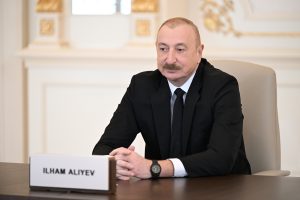
For six years now, the Azerbaijani people have been celebrating tragedies in a different spirit, along with holidays. Because Karabakh and the Eastern Zengez are now free from the enemy’s clutches. The revenge of all martyrs and Khojaly victims was taken on the battlefield. The 44-day history of the Second Karabakh War of 2020 ended with our Victory. Under the leadership of the Victorious Supreme Commander-in-Chief Ilham Aliyev, our brave army wrote the proud, Victory page of our history. On October 15, 2023, the Head of State, the Victorious Supreme Commander-in-Chief Ilham Aliyev raised our tricolor Flag, a symbol of victory, in Khankendi, Khojaly, Khojavand, and Agdere.
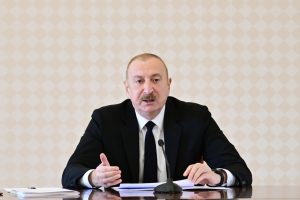
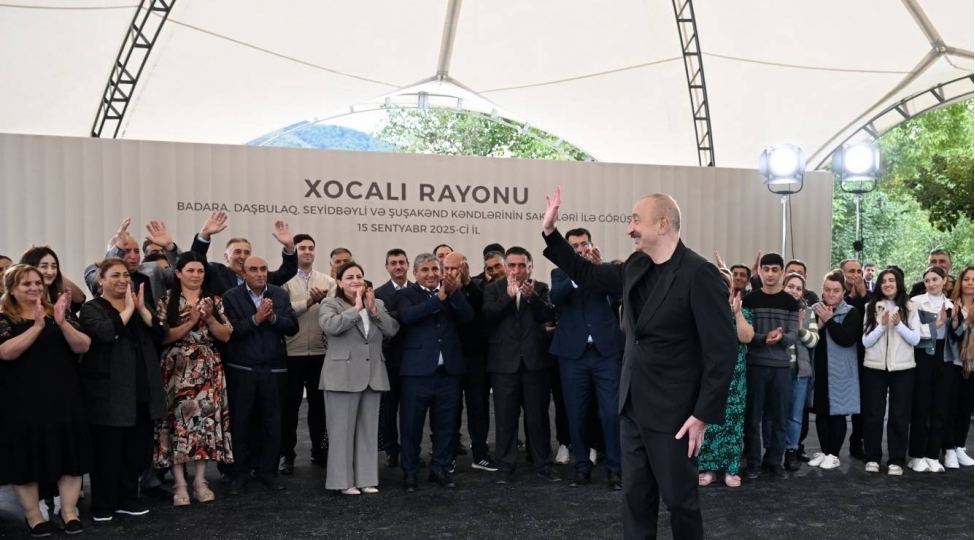
Today, like all territories liberated from occupation, the city and villages of Khojaly attract attention with large-scale restoration work and the return of residents to these lands. On May 28, 2024, on Independence Day, President Ilham Aliyev announced with great pride that the Khojaly page of the Great Return Program was written. On that day, at a meeting with residents who moved to the city of Khojaly, the head of state Ilham Aliyev said, “I know that when the Second Karabakh War ended, the people of Khojaly believed, they knew that this day would come too.” Currently, the settlement of the city and villages of Khojaly continues. As of January 19, 2026, a total of 881 families and 3,602 people have been resettled to the city and villages of Khojaly. President Ilham Aliyev expressed this confidence in September last year at a meeting with residents of the villages of Badara, Dashbulag, Seyidbeyli and Shushakend in the Badara village of the Khojaly region that from now on there will be only joyful days in your life. That suffering, injustice, and injustice are left behind. The Azerbaijani state has created all the conditions for you. Most importantly, you and your followers will live forever in your native Karabakh. This is a triumph of justice. We have restored justice, first of all, we have restored our rights, we have put an end to the Armenian occupation: “Today, we prove once again that we are right. They destroyed our cities and villages, and we are building and creating. All of Karabakh, all of East Zangezur is a construction site. The restoration and construction of these beautiful houses, the creation of all infrastructure in a short period of time show our strength and intention. The main thing is that the citizen of Azerbaijan is at the center of all our political steps. You – citizens of Azerbaijan, residents of the Karabakh region suffering from the Armenian occupation – deserve the best conditions today. I congratulate you, I wish you a happy life, and we will live here forever.”
Today, Karabakh and East Zangezur are experiencing their period of development. With the application of modern urban planning principles, systematic and consistent measures are being taken to build a sustainable infrastructure of the Karabakh and East Zangezur regions, rebuild settlements, and create the necessary conditions for the return of the population. Over the past period, 3 new international airports, automobile and highway roads, new railway infrastructure have been built on these lands, and the construction of residential buildings, health facilities, educational institutions, and other social infrastructure is also ongoing. The constructive process carried out in the Karabakh and East Zangezur regions is of particular importance not only in terms of urban planning and infrastructure development, but also in terms of establishing long-term peace and cooperation in the region.
Vugar Aghayev